The Ultimate Guide to Smart Home Devices Automation, Technology, and Control
Imagine walking into your home after a long day, and everything adjusts to your preferences without lifting a finger—the lights dim softly, your favorite playlist starts playing, and the thermostat creates the perfect cozy temperature. However, for many tech enthusiasts like yourself, achieving seamless control of various devices remains a challenge. You often find yourself tangled in wires and compatibility issues, tweaking settings instead of enjoying an automated haven.
But worry no more—technology has advanced significantly, offering smarter solutions that integrate smoothly with each other. We’ve meticulously researched the latest smart home innovations to compile this guide just for you. From voice-controlled hubs to intelligent thermostats and security systems, uncover how these devices can transform your living space into an efficient, secure sanctuary without sacrificing ease of use.
For beginners, some top recommended smart home devices include the Amazon Echo Dot for voice control, Philips Hue smart bulbs for lighting, and a Nest Learning Thermostat for climate control. These devices are user-friendly, widely compatible, and offer great entry points into building a smart home ecosystem.
10 Essential Smart Home Devices
In the world of smart homes, certain devices serve as building blocks for creating an integrated and automated living space. Each device has a specific role, offering different types of functionality that contribute to the overall convenience and security of your home.
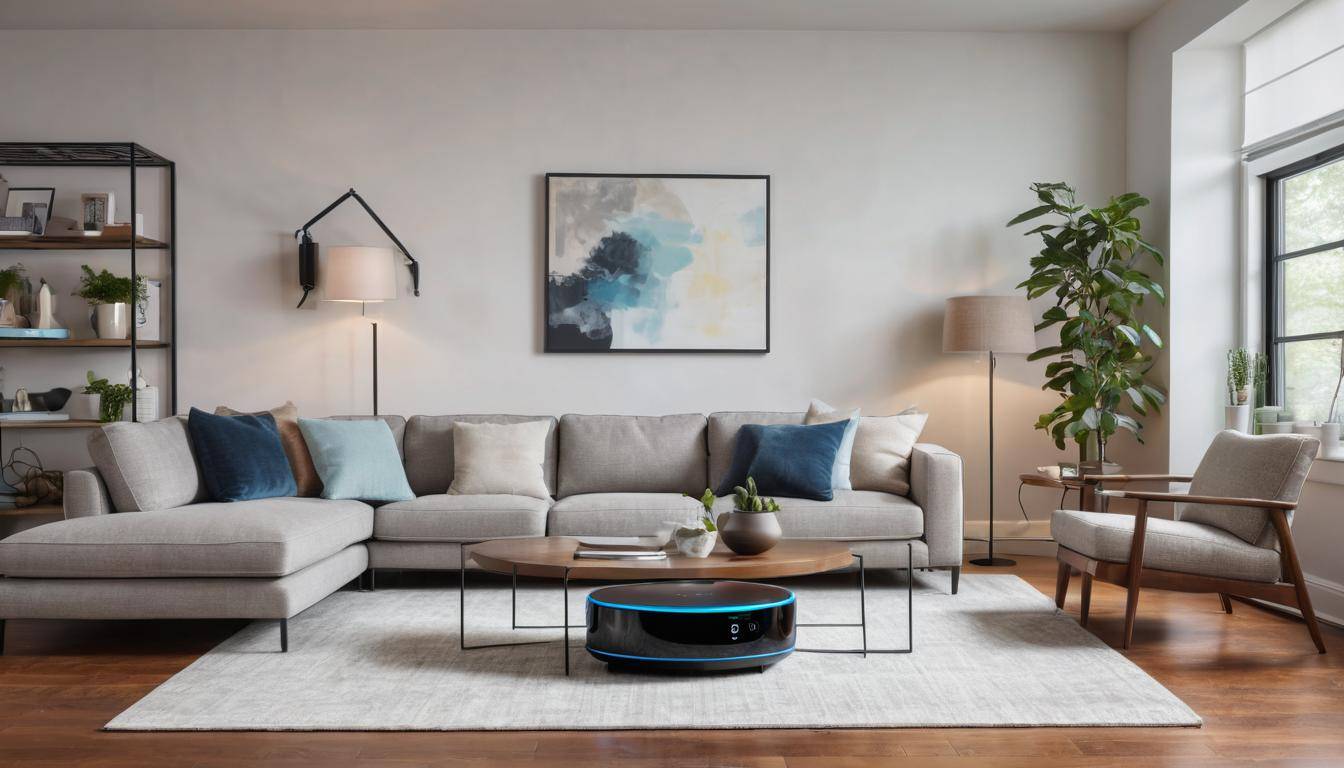
1. Smart Speakers: Smart speakers like the Amazon Echo Dot and Google Nest Audio do more than play music. They function as voice-controlled hubs connecting and communicating with other smart devices in your home. Not only can you control them using voice commands, but they also act as central information sources, providing weather updates, news, and much more.
2. Smart Thermostats: Intelligent temperature control is key to energy efficiency and comfort in a smart home. Devices like the Ecobee Smart Thermostat and Google Nest Learning Thermostat learn your habits and preferences to optimize heating and cooling based on your routine, ultimately leading to cost savings and environmental benefits.
Consider this – smart thermostats can automatically adjust the temperature based on whether you’re at home or away, helping you save money and energy without sacrificing comfort.
3. Smart Locks: Gone are the days of fumbling for keys. Smart locks such as the Ultraloq U-Bolt Pro offer keyless entry and remote access capabilities. This enhances both security and convenience, enabling you to grant access to family members, friends, or service providers from anywhere using a companion app.
4. Smart Cameras: For added peace of mind, smart cameras like the Arlo Pro 4 and Eufy Security Cam provide high-definition video recording and intelligent alerts for enhanced surveillance. Being able to monitor your home remotely adds an extra layer of security when you’re away.
The next set of devices will continue to augment your smart home experience, offering both practicality and convenience in equal measure.
Key Benefits of Smart Technology
Smart technology is more than just a trendy addition to your household. It brings valuable benefits that can enhance various aspects of your life, contributing to convenience, energy efficiency, and security.
Convenience
By integrating smart home devices into your everyday routines, you can easily automate numerous tasks. With a simple voice command or through an app on your smartphone, you can control lights, lock doors, and adjust the thermostat without even lifting a finger. Imagine arriving at your front door laden with grocery bags and being able to unlock it with just a voice command. It’s like having a personal assistant at your beck and call!
This type of automation doesn’t just save time; it also provides peace of mind. For instance, if you forget to turn off your oven after leaving the house, you can do so remotely using your smart device. The ability to manage everyday tasks from anywhere truly streamlines your life.
Energy Efficiency
One of the most remarkable benefits of smart technology is its contribution to energy efficiency. Smart thermostats are a prime example as they possess learning capabilities to understand your heating and cooling preferences over time. By doing so, they optimize the energy usage of your HVAC system, leading to potential annual savings on energy bills. According to Energy Star, users can expect to save up to $140 annually on energy costs by incorporating smart thermostats into their homes.
Imagine coming home to a perfectly cozy environment during the winter months or walking into a refreshingly cool space on hot summer days, all while reducing energy consumption and minimizing environmental impact. Smart devices bring about this harmonious blend of comfort and sustainability.
Enhanced Security
In today’s world, ensuring the safety and security of our homes is paramount. Smart technology offers a sophisticated layer of protection through devices such as smart locks, video doorbells, and security cameras that provide real-time monitoring and alerts. These tools allow homeowners to keep a constant watch over their property, deterring potential intruders and providing valuable evidence in case of any untoward incidents.
Considering that homes equipped with smart security systems reportedly experience 60% fewer break-ins according to data from Safewise, it’s evident that these solutions are effective in safeguarding our living spaces.
Accessibility
Smart technology extends its benefits beyond mere convenience and efficiency; it also enables greater accessibility for individuals with disabilities. Voice-controlled commands pave the way for increased independence by allowing easy management of lights, thermostats, and other home essentials through simple vocal instructions.
For those with physical limitations, such advancements can be transformative, empowering them to navigate and interact with their living spaces more comfortably and autonomously. The inclusive nature of smart technology serves as a testament to its profound impact on improving overall accessibility within our homes.
These key benefits of smart technology indicate the far-reaching advantages it delivers beyond mere gadgetry, revolutionizing how we interact with our living spaces and fostering unprecedented levels of convenience, efficiency, security, and accessibility.
Now that we’ve unveiled the manifold advantages of integrating smart technology into our homes, let’s focus our attention on one aspect that plays a pivotal role in shaping our living environment—the realm of smart lighting solutions.
Smart Lighting Solutions

Imagine being able to control the ambiance and brightness of your home with just a tap on your phone or a simple command. This is the sheer magic of smart lighting solutions. By integrating advanced features, such as color-changing, dimming, and scheduling into your home’s lighting system, companies like Philips Hue and LIFX are revolutionizing the way we interact with and experience light.
Color Changing: Some days, you may want crisp, bright white light to increase focus and productivity while other times, a warm, soft glow may be perfect for winding down after a long day. Smart lighting allows you to effortlessly change the color of your lights to suit any mood or occasion. Whether it’s a gentle lavender for relaxation or a vibrant teal for a party, the ability to transform your space with a simple swipe is both empowering and delightful.
Dimming: Say goodbye to fumbling with dimmer switches because smart lighting systems offer seamless dimming features that allow you to adjust the brightness of your lights at the touch of a button.
The Power of Scheduling
By utilizing this feature, you can program your lights to turn on or off at specific times throughout the day, even if you’re away from home. Imagine arriving back from work to a warmly lit house without having to lift a finger, or having your outdoor lights automatically illuminate as dusk falls. This not only enhances convenience but also contributes to an increased sense of safety and security.
Seamless Integration with Smart Assistants
Amazon Alexa, Google Assistant – these ubiquitous voice assistants have further amplified the utility and ease of managing smart lighting systems. By simply giving voice commands, you can dictate color changes, adjust brightness levels, or activate pre-set routines without lifting a finger.
When you integrate smart lighting into broader routines—such as turning off all lights when you leave the house—you’re not only simplifying daily tasks but also reducing unnecessary energy consumption in an effortless manner.
For instance, integrating smart lighting with motion sensors can help ensure that lights are turned off in unoccupied rooms, reducing energy wastage while adding a layer of convenience to everyday life.
In essence, smart lighting solutions represent an exciting evolution in defining our living spaces, offering unprecedented customization and control over one of the most elemental aspects of our environment—illumination.
Moving forward from illuminating our homes to fortifying them, let’s now explore the latest cutting-edge advancements in home security. This is where innovation meets protection.
Home Security Innovations
The world of home security has experienced extraordinary innovation in recent years, with technological advances contributing to the creation of smarter, more efficient security systems. Gone are the days when a simple lock and key were sufficient to protect our homes. Now, we have sophisticated video doorbells, surveillance cameras, and alarm systems that provide an unparalleled level of security and peace of mind.
Notable Innovations
One notable example is the Arlo Pro 4. This innovative system boasts 2K HDR video quality, ensuring that every detail is captured with exceptional clarity. Its advanced color night vision feature takes home surveillance to the next level by providing enhanced visibility even in low-light conditions. This means you can rest easy, knowing that your home is under constant watch, day and night.
Another impressive addition to the realm of smart home security is the Ring Alarm Security Kits. These comprehensive kits integrate motion detectors, keypad controls, and professional monitoring services, offering a robust defense against potential security threats. With real-time alerts and remote access capabilities, these systems allow you to stay connected to your home’s security status at all times, no matter where you are. Additionally, their seamless integration with other smart devices ensures that your home security network operates cohesively with your broader smart home ecosystem.
Ultimately, these advancements in smart home security not only offer heightened protection but also facilitate greater convenience and control over your living space. By leveraging the latest technology, you can safeguard your home with a level of efficiency and intelligence that was previously unimaginable.
With these cutting-edge innovations at your fingertips, you’ll gain unrivaled confidence in the security of your home and enjoy invaluable peace of mind.
The evolution of smart home security solutions has brought about a new era of safety and convenience for homeowners everywhere.
Integration with Internet of Things
The Internet of Things (IoT) has revolutionized the way we interact with our homes, allowing smart devices to communicate and making our lives more convenient and efficient. Your house becomes a symphony of interconnected gadgets working in perfect harmony, all thanks to IoT integration.
When smart devices can “talk” to each other, magic happens. Imagine waking up, walking into your kitchen, and your coffee machine starts brewing your favorite cup of joe without you saying a word. Meanwhile, your blinds open up to let in the morning sun, and your thermostat nudges the temperature to a comfortable level—all without you lifting a finger.
This is what IoT integration is all about—making tasks easier and automating everyday routines. With IoT, your smart thermostat can work in tandem with your smart lock, adjusting the temperature as soon as your lock indicates that you’ve left the house. This seamless coordination not only saves energy but also boosts overall convenience.
Moreover, popular platforms like Amazon Alexa and Google Assistant take IoT to a whole new level by offering voice control and centralized management for all connected devices. Imagine commanding your household appliances just by speaking a few words or controlling everything through a single app—it’s an effortless way to elevate your living space.
For instance, imagine being able to dim your lights, adjust room temperature, play music, and check on your security cameras—all just by asking a virtual assistant like Amazon Alexa or Google Assistant. The possibilities for streamlining daily tasks are endless with such integrations.
IoT integration not only offers convenience but also opens up a world of personalized automation opportunities. You can set up “scenes” where multiple devices act in unison based on specific triggers or schedules. For example, creating a “Movie Time” scene that dims the lights, closes the curtains, and turns on the TV—all with just one command.
In essence, IoT integration empowers your smart home devices to work together seamlessly, transforming routine tasks into effortless experiences while enhancing overall efficiency and convenience.
By understanding the power of IoT integration in smart homes, you can now make informed decisions when choosing the right devices to elevate your living space.
Choosing the Right Devices
When it comes to building a smart home, it’s crucial to approach it with a clear understanding of what you need and how different devices can fulfill those needs. Here are some essential considerations to guide you through the selection process.
Assess Your Specific Needs
Before delving into the world of smart home devices, take some time to contemplate what aspects of your daily life you’d like to automate or enhance. For instance, do you prioritize energy efficiency in your home? If so, focusing on smart thermostats and energy-efficient lighting would be a great starting point. Maybe security is your top concern—consider incorporating smart locks, doorbell cameras, and motion sensors. Understanding your unique priorities will ensure that you invest in devices that truly benefit your lifestyle.
Ensure Device Compatibility
Once you’ve determined which devices align with your needs, it’s critical to ensure their compatibility with each other and with your chosen smart home platform. Whether you prefer Amazon Alexa, Google Assistant, Apple HomeKit, or another ecosystem, selecting devices that seamlessly integrate with your existing setup will streamline your smart home experience. This will prevent any frustration caused by incompatible devices not communicating effectively.
Compatibility between devices within a smart home ecosystem is crucial for ensuring seamless automation and control.
Budget Considerations
Smart home device prices can vary widely. Establishing a budget is an important initial step in creating your smart home setup. Start by incorporating essential devices that align with your financial resources and plan to gradually expand your smart home system over time.
For instance, if you’re interested in enhancing home security, you might begin by investing in a smart security camera and a connected doorbell within a budget-friendly range. As your budget allows, you can then consider adding additional security features such as smart locks and motion detectors.
Our website provides detailed reviews and price comparisons, enabling you to make informed decisions that align with your budget and preferences.
By carefully considering your specific needs, ensuring device compatibility within your chosen ecosystem, and approaching the selection process with a realistic budget in mind, you can confidently curate a selection of smart home devices that enhance both the convenience and efficiency of everyday living.
With the essentials of choosing the right devices for your smart home now at your disposal, it’s time to dive into the critical aspect of future-proofing your investment in these technologies.
Future-proofing Your Smart Home

As technology continues to advance rapidly, considering how to future-proof your smart home becomes crucial. Investing in upgradable devices and embracing standards like Matter can guarantee the relevance and functionality of your smart home for years to come.
When investing in upgradable devices, prioritize products that receive regular firmware updates and support new technologies. For instance, the Nest Learning Thermostat offers software updates to enhance functionality as new features and improvements are released. This means you can update your device to stay current without replacing it entirely. Upgradable devices not only provide longevity but also adaptability, offering the flexibility to enhance and expand your smart home ecosystem without being tied down by outdated technology.
In addition to investing in upgradable devices, embracing standards like Matter significantly contributes to future-proofing your smart home. Matter is an upcoming standard that aims to ensure interoperability between smart devices from different manufacturers. By investing in Matter-compatible devices, you can create a cohesive and interconnected smart home system capable of seamlessly integrating new devices and technologies as they emerge. This standardization helps mitigate issues related to compatibility and obsolescence, providing a solid foundation for the longevity of your smart home setup.
Picture a scenario where your smart thermostat, lights, and security system all work together flawlessly because they adhere to the same industry standard. With Matter-compliant devices, this level of seamless integration becomes a reality, paving the way for a future-proof smart home that can evolve alongside advancements in technology.
By investing in upgradable devices that receive regular firmware updates and aligning with industry standards like Matter, you can ensure that your smart home remains adaptable and relevant amidst the ever-evolving landscape of technology.
As you take steps to future-proof your smart home, understanding how to set up and troubleshoot various devices becomes essential. Let’s now explore practical tips for setting up a seamless smart home experience while effectively addressing common troubleshooting issues.
Setting Up and Troubleshooting
Setting up a smart device can be akin to solving a puzzle – you have to figure out how to piece it together and get it to work seamlessly. Each smart home device comes with its own installation process and requirements. It might feel overwhelming initially, but if you follow the manufacturer’s guidelines meticulously, things will start falling into place.
Step I: Installation
When unboxing your new smart gadget, the first step is to carefully read the setup instructions provided by the manufacturer. This usually involves downloading their companion app on your smartphone, creating an account, and following precise step-by-step installation guidelines. Some devices may need to be plugged in, while others might require battery insertion.
Keep in mind: Following these instructions precisely can help avoid potential issues later on and ensure that your device works as intended.
After installing your smart devices, it’s time to think about integration. The best part about a smart home is when all your devices work together seamlessly, making your life more convenient. This is where smart home hubs or voice assistants like Apple HomeKit, Amazon Alexa, or Google Assistant come into play.
Step II: Integration
Using these central systems allows you to integrate all your devices, enabling them to work in unison. You can configure routines and automation – imagine walking into your living room and saying “Good morning” to trigger your coffee maker, adjust the thermostat, and play some light music all at once. It’s like having your own personal butler!
If things don’t seem to be working quite right, troubleshooting the issue is essential before getting fed up with your intelligent assistant. Smart devices are complex pieces of technology, and sometimes they run into problems just like any other gadget would.
Step III: Troubleshooting
Common issues can arise from connectivity problems or device malfunctions. If you notice that a device isn’t responding as it should, start by restarting your Wi-Fi router or updating the firmware of the troublesome gadget. Many manufacturers also provide detailed troubleshooting guides in their apps or websites, helping you identify and resolve issues quickly.
FUN FACT: Did you know? Smart home devices have dramatically evolved over recent years, making the installation process much more user-friendly than it used to be.
By following these careful steps for setting up and troubleshooting your smart home devices, you are not only ensuring that everything operates smoothly but also getting the most out of each device’s capabilities. These little hiccups are easily fixed once you know what to do!
Are smart home devices compatible with different smartphone platforms?
Yes, smart home devices are compatible with different smartphone platforms. The majority of smart home devices today support both iOS and Android operating systems, making them accessible to a wide range of users. According to a survey conducted by Statista in 2020, 72% of smart speaker owners reported using their devices with smartphones, indicating the compatibility between different platforms. Additionally, many manufacturers provide dedicated apps for specific devices that can be downloaded from app stores for seamless integration and control across platforms.
How do smart home devices work?
Smart home devices work by connecting to a central hub or network, typically through wireless technologies like Wi-Fi or Bluetooth. These devices use sensors and actuators to collect data and perform actions based on user preferences or automated routines. For example, a smart thermostat can monitor the ambient temperature and adjust it according to pre-set preferences or occupancy patterns, leading to energy savings of up to 20% (according to a study by the U.S. Department of Energy). Similarly, smart security systems can detect motion or open doors/windows and send alerts to homeowners’ smartphones, reducing the risk of break-ins. Overall, smart home devices enhance convenience, energy efficiency, security, and comfort in our living spaces.
What security measures should be taken when using smart home devices?
When using smart home devices, it is crucial to prioritize security to protect your privacy and prevent potential vulnerabilities. Firstly, regularly update the firmware of all devices to ensure they have the latest security patches. Secondly, secure your Wi-Fi network with a strong password and enable WPA2 encryption. Additionally, utilize two-factor authentication whenever possible to add an extra layer of security. A recent survey conducted by Parks Associates revealed that 32% of U.S. broadband households experienced a smart home device privacy or security problem in the past year, further highlighting the importance of taking these measures seriously.
What are the benefits of using smart home devices?
The benefits of using smart home devices are numerous. Firstly, they offer convenience by allowing users to control various aspects of their homes remotely, whether it’s adjusting the thermostat, turning on lights, or even monitoring security cameras. Smart devices also enhance energy efficiency by optimizing power usage based on occupancy and weather conditions. According to a study conducted by Statista in 2023, smart thermostats alone reduced heating costs by an average of 15% and cooling costs by 20%. Additionally, these devices improve home security through features like smart locks and doorbell cameras, which can deter potential intruders. Overall, smart home devices provide homeowners with comfort, savings, and peace of mind.
What is the cost of setting up a smart home system?
The cost of setting up a smart home system varies depending on the level of automation and technology you desire. On average, basic smart home systems can be set up for around $500, including smart speakers, connected lighting, and a hub. However, if you opt for more advanced features like security cameras, door locks, and energy management systems, the cost can range from $1,000 to $5,000 or more. Additionally, ongoing expenses may include monthly subscriptions for certain services or apps.